
'A balanced head plus heart approach would be a full opening up of the economy including manufacturing and internal travel in the country but excluding COVID-19 hotspots,' recommends Jaimini Bhagwati.
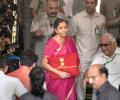
'The household sector, which is still the largest contributor of financial savings, has been experiencing a decline in the last six years, and it has fallen below 8% of GDP.'
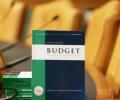
Experts have started giving comments on provisions that the govt must make in Budget 2016-17.

But it is disappointing to note that Sitharaman's third Union Budget continues to promote a few problematic ideas, observes A K Bhattacharya.

Several institutional investors were ineligible to invest in these companies as they failed to meet the disclosure norms
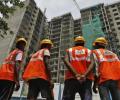
Modi govt must bring about reforms to kick-start big-ticket infra projects.

Mauritius is biggest route for investment into India.

There's a looming water crisis facing the country, and it comes down to how the states are faring in water resource management.

This may mean easier access, simplified KYC and documentation requirements, and fewer investment restrictions for a majority of FPIs, especially broad-based funds and pooled vehicles that were earlier part of Category-II.

Bangladesh might overtake India this year by per capita income in nominal dollars, but it is not yet close to becoming South Asia's economic powerhouse anytime soon, T N Ninan points out.

The government hopes to use this data to assess the extent of financial support needed to recover from the pandemic.

The implementation of their recommendations means that an adequate apparatus to change this is at the disposal of the government.

Resource constraints have forced the planning commission to scale down investments by 12.5 per cent in crucial areas including agriculture, power and manufacturing.
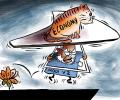
The reform priorities are clear: enhance savings, improve productivity. Just 25 basis points of moving interest rate up or down would not boost investment: Former RBI Governor Y V Reddy.
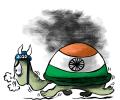
'Slowing down of the economy was mainly due to the demonetisation shock...' 'If you cut off the oxygen supply to a patient in the ICU and the patient dies, the patient does not come alive again when you restore the oxygen supply.'

Railways to have functional autonomy, bear salary burden

There are various estimates of India's debt to GDP ratio, but the consensus is that that it would be over 80 per cent at the end of the current fiscal year.

A United Nations expert body on Thursday said surge in food prices in India is a matter of concern, but retail price inflation will cool down to 7.5 per cent this year from around 12 per cent last year.
"India's economy is projected to sustain a 7.6 per cent growth rate in both fiscal years 2016-17 and 2017-18," says the year-end update of the flagship report Economic and Social Survey for Asia and the Pacific 2016 of the United Nations Economic and Social Commission for Asia and the Pacific (ESCAP).

Modi campaigned on the issue of national security, which cannot be ensured without a strong economy.

Major corporates are staring at an uncertain future after investing substantially on their projects
Several speakers noted that Budget carried the weight of expectations.

The government was also faced with problems on its balance of payments. It took steps to conserve declining foreign exchange reserves, and began to regulate the production, supply and distribution of gold. It banned forward trading in the yellow metal in November 1962, and introduced gold bonds as well, reveals the RBI's annual report for the year ending June 1963.

The tall claims that the state administration, particularly Modi's highly charged PR machinery has created to hardsell the state, and in turn Modi himself, are not reinforced by the numbers

Union minister Prakash Javadekar accused the Congress of ignoring farmers' interests and keeping them poor to ensure cheap grain prices, and asserted that the Modi government empowered them by implementing the Swaminathan commission report to give them remunerative price through MSP.
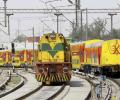
This comes as IR posted its worst operating ratio (money spent to earn every Rs 100) in 16 years, at 96.9 in 2016-17.

Here's the full text of President Ram Nath Kovind's address to the nation on the eve of 72nd Republic Day.
The Indian regulator played key role in uncovering the identity of two Indian men who floated the scheme
The Indian economy is expected to return to the pre-crisis growth trajectory of about 9 per cent in a couple of years.

'We have often heard the mythical argument that patents block access to life-saving drugs, but only 5% of medicines from multinational companies are under patent protection in India.' 'Where these patented products are beyond the reach of Indian patients, the companies have programmes to facilitate access to their drugs, for free or for a fraction of the price,' points out Ranjana Smetacek, former director general, Organisation of Pharmaceutical Producers of India.

According to the report, the generation projects envisaged for completion by 2018-19 need to be given priority in fuel linkage.

Abu Dhabi national carrier had bought 24 per cent stake in Jet Airways for $379 million in April.

India and Tajikistan on Monday pledged to further deepen their cooperation to fight terror and agreed to step up defence ties besides boosting trade and investment.

'Even if Serum Institute and Bharat Biotech were successful in ramping up production overnight, what happens to the capacity after the demand from India is met?' asks Sanjeev Nayyar.

Banks bore the brunt of the sell-off.

The Pakistan Hockey Federation has threatened to pull out of next year's World Cup in India unless assured of "easy procurement" of visas and "top security" for its players at the event.
Aiming to improve the living standards in the country, the 11th Plan draft document has set ambitious targets of per capita income growth of 7.6 per cent each year and an overall average economic growth of nine per cent. The Plan aims at an average growth rate of 9 per cent, accelerating it from 8 per cent in the first year of the Plan (2007) to 10 per cent by the end of the Plan period (2011-12).

Economists have cautioned that any deferment of the government's fiscal goals would prove counter-productive and raise the interest payment burden.
'As his party's Supreme Leader, Modi has led India down the wrong road by insisting on friendship with China even as its soldiers went about claiming territory,' argues Harishchandra Dighe.

The government is considering a proposal to privatise some state-owned banks in phases.
